
Reviewed · USHUAIA TOURS
Exploring Ushuaia: Double Decker Bus Tour
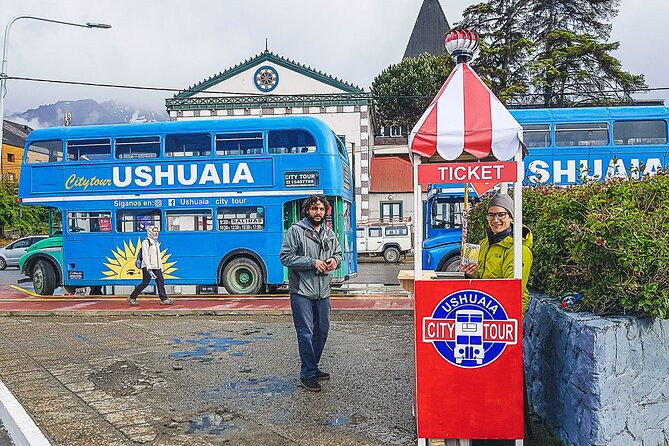
Ushuaia looks small on a map, but its hills spread quickly. This one-hour bus ride gives you a useful first look at the city, from the Antigua Casa de Gobierno and Malvinas Memorial to the old Prisoners’ Road and harbor. I especially like the hilltop views over Ushuaia and the chance to cover far more ground than you could on foot in the same time.
I also like the short format, the several departure times, and the low group limit of 20 people. The main drawback is that the commentary can be prerecorded or fairly brief, and the older bus may feel cramped or bumpy, especially upstairs. At $32, I see this as an orientation tour, not a full historical excursion.
In This Review
- Key points to know before boarding
- Why this short ride works in Ushuaia
- The old government center and Ushuaia’s first institutions
- Malvinas Memorial and the First Cemetery
- Science, education, and the climb into the hills
- Pipo River and the old Prisoners’ Road
- Laguna del Diablo and the photo stop
- Saint Christopher, the waterfront, and the final stretch
- Commentary, languages, and the ride itself
- Is $32 a fair price?
- Timing, weather, and seasonal changes
- Who should book this Ushuaia bus tour?
- Should you book it?
- FAQ
- Where does the Ushuaia double-decker bus tour begin?
- How long does the tour last?
- How much does the tour cost?
- Is the tour available in English?
- Which other languages are available?
- When does the double-decker version operate?
- Does the tour include hotel pickup?
Key points to know before boarding

- The route covers about 15 kilometers: You see central Ushuaia, residential districts, hillside viewpoints, the Pipo River, and the waterfront.
- The best views come from higher ground: Monte Gallinero, Monte Vigía, and a photo stop near Laguna del Diablo show the city, harbor, and surrounding scenery from above.
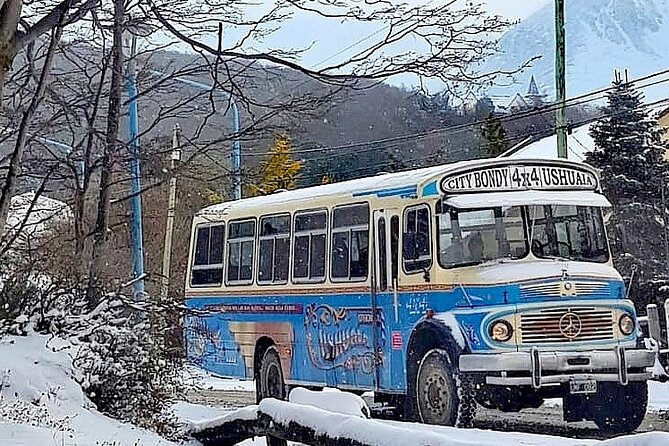
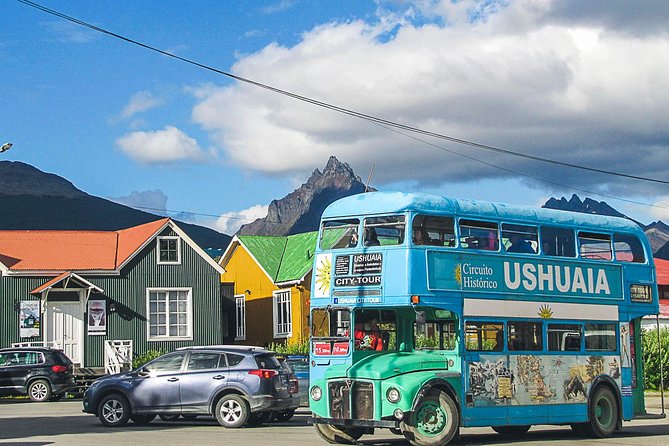
- It runs from October through April as a double-decker: In winter, the vehicle changes to a Bondi 4×4 and the tour operates in Spanish only.
- The tour lasts about 70 minutes: It works well on your first day, during a short port visit, or when rain makes a long walk less appealing.
- Commentary varies by departure: Summer departures include an English and Spanish-speaking guide, while some rides use recorded narration. Other languages are available through seat equipment with your own headphones.
- Route details can change: The published stops include the End of the World Museum, but one recent ride did not stop at the Maritime Museum and Prison, so confirm the current route if that site matters to you.
Why this short ride works in Ushuaia
Ushuaia is often treated as a launch point for Antarctica, but the city itself deserves a little time. The center is walkable, yet the streets climb sharply toward the hills. A bus tour solves that problem quickly. You can see the older core, newer neighborhoods, research institutions, and high viewpoints without spending the afternoon climbing.
I would take this tour early in a stay. It helps you understand the shape of Ushuaia before you choose where to return on foot. You may spot a museum, neighborhood, or view you want to explore more slowly later.
The experience begins at Civic Plaza, along Avenida Maipú, near the Antigua Casa de Gobierno. The bus returns to this same meeting point, which is convenient if you are staying in central Ushuaia or arriving from the waterfront. Hotel pickup and drop-off are not included, so you need to make your own way to the plaza.
The small group limit of 20 is helpful. This is not an enormous city bus with a crowd spilling into every seat. Still, the upstairs section has narrow stairs, and loading everyone at photo stops can take time. If you want a quieter ride, board early and choose a seat away from the busiest area.
More things to do in Ushuaia:
- Ushuaia: National Park & Train of the End of the World Tour
★ 4.5 · 811 reviews - End of the World Train Ticket
★ 4.0 · 685 reviews - Beagle Channel Navigation with Minitrekking
★ 5.0 · 642 reviews
The old government center and Ushuaia’s first institutions
The first section introduces the city through its public buildings. The Antigua Casa de Gobierno, or Old Government House, sets the tone. Ushuaia grew around administration, shipping, education, and the difficult business of settling at the southern end of the continent.
The route also points out the first school and the First Chapel. These are modest places, but they help explain how a remote settlement developed basic civic and religious institutions. I like this opening because it gives you a human frame for the city. Ushuaia is not only a dramatic place on a map. It is also a community built through schools, government offices, faith, work, and transport.
The stop at the Lucinda Otero House adds an architectural detail. The house represents local building traditions and the spiritual life of the city. You only spend about five minutes here, so expect a quick look rather than a guided visit inside.
That short timing is typical of the whole ride. You are seeing landmarks from the bus or during brief pauses, not entering every building. If you want detailed architecture or museum interpretation, you will need a separate visit.
Malvinas Memorial and the First Cemetery
The Malvinas Memorial is one of the more serious stops. It honors Argentine combatants from the Malvinas War, known in many countries as the Falklands War. The monument carries national meaning, and your guide or recorded narration places the site within Argentina’s modern story.
You may find the stop brief, but it is worth paying attention. It is one of the moments when the tour moves beyond scenery and addresses a subject that remains important in Argentine public life. A quick photograph does not tell you much by itself, so listen carefully if the commentary is clear.
The First Cemetery offers a quieter pause. Cemeteries can seem like an odd stop on a city bus route, yet this one connects Ushuaia to its earliest residents and local memory. It is a short visit, around five minutes, and more reflective than entertaining.
I would not expect a major monument or a long walk here. Think of it as a small historical marker in the city’s development. The value comes from the sequence: government, school, chapel, memorial, and cemetery. Together, these stops show how a remote settlement became a permanent town.
Science, education, and the climb into the hills
The bus then passes the CADIC and the National University of Tierra del Fuego. These institutions represent the scientific and educational side of the region. Their presence matters because Ushuaia is not only a tourist gateway. It is also a base for research and higher education in a far-southern setting.
As the bus climbs toward Monte Gallinero and Monte Vigía, the tour becomes more visual. From these higher points, you can look over the city and harbor. This is where I find the bus most useful. Walking from the center to these viewpoints takes effort, while the ride gets you there without spending your limited time on steep streets.
The views depend heavily on the weather. Ushuaia can shift from clear skies to rain with little warning. On a bright day, you may get the broad panorama that makes this ride memorable. In poor weather, clouds can hide much of the view.
Bring a rain jacket even if the morning looks dry. The open upper deck is appealing, but it leaves you exposed to wind and rain. The lower deck is warmer and more sheltered, though you give up some of the elevated view.
A completely different kind of day:
- Ushuaia: Penguin Watching Tour by Catamaran
★ 4.5 · 439 reviews - Ushuaia: Catamaran Sailing to Penguin Island
★ 4.4 · 436 reviews - Ushuaia: Beagle Channel & Sea Wolves Island Catamaran Cruise
★ 4.6 · 433 reviews - National Park and Train Trip End of the World Guided Tour
★ 4.0 · 414 reviews
Pipo River and the old Prisoners’ Road
The route continues past the Pipo River and the newer neighborhoods before entering Camino de los Presos, or Prisoners’ Road. This part adds social history to the ride.
The road is tied to Ushuaia’s former prison system and the labor carried out by prisoners. The subject helps explain an important part of the city’s past, though the five-minute stop is too short for a full account. I would listen closely here and plan a separate visit to the Prison Museum if you want more detail.
The bus format has an advantage on this stretch. You see how the older parts of town connect with newer housing areas, and you get a sense of how the city spreads beyond the central waterfront. The drawback is that a slow-moving, older bus can feel less efficient than a taxi if your only goal is to reach one specific site.
The upper deck can also bounce on uneven roads. That adds charm for some people, but it may not suit anyone prone to motion sickness or uncomfortable with narrow stairs. The ride is generally described as safe, though comfort depends on your seat and the condition of the road.
Laguna del Diablo and the photo stop
Laguna del Diablo is the main planned break for photographs. You get off, take pictures, and have a little time to look around before continuing through the Barrio de los Italianos and past the local hospital.
This is one of the tour’s more practical features. You are not trapped on the bus for the full 70 minutes. A short break lets you stretch your legs and take photos without rushing through every view from a window.
Still, keep expectations measured. The stop is brief, and the pond may feel less impressive in dull weather than it does in promotional pictures. One critical assessment found the hill stop and Laguna del Diablo less appealing than expected, while other passengers considered the high views excellent. That difference is mostly about weather, personal taste, and expectations.
I would treat this as a useful photo pause rather than a major natural attraction. If you want a longer visit to lakes, forests, or mountain areas, book a dedicated excursion instead. This bus tour remains within the city and its immediate surroundings.
The Italian neighborhood and hospital section may not sound exciting, but it gives you a look at everyday Ushuaia beyond the postcard center. You see where people live and where local services operate. That ordinary detail is part of the tour’s appeal.
Saint Christopher, the waterfront, and the final stretch
Near the end, the bus passes the Saint Christopher shipwreck and the End of the World Museum. Saint Christopher is a familiar maritime sight in the harbor, and its presence fits Ushuaia’s identity as a port city.
The End of the World Museum adds another important historical layer. It covers local culture, exploration, natural history, and the difficult process of life in Tierra del Fuego. The bus stop itself is short, so do not confuse seeing the building with visiting the museum properly.
The final section returns toward the Naval Pier and the Fournier Monument. These locations connect Ushuaia with ships, maritime work, and the pioneers who helped build the town. Finishing at the waterfront makes sense. Much of Ushuaia’s character comes from its relationship with the Beagle Channel and the vessels that pass through it.
One point deserves careful attention: route details have not always been consistent. A passenger expected a stop at the Maritime Museum and Prison but found that the bus no longer went there. Another account described the tour as finishing at the Prison Museum with a possible admission discount. Since the current route may change, ask at the departure point if you specifically want to get off there. Do not assume that passing close by means the bus will stop.
Commentary, languages, and the ride itself
The summer version includes a professional guide who speaks English and Spanish. Some departures also use prerecorded narration in both languages. The difference matters. A live guide can respond to questions and add detail, while a recording keeps the timing consistent but cannot adapt to what you are seeing.
The quality of the explanation appears to vary. Many people find it clear and informative, especially as an introduction to Ushuaia’s history. Others find the information minimal. I would book this for a broad overview, not for an academic talk.
Seat equipment is available in German, Chinese, Russian, Italian, French, and Portuguese. You need your own headphones with a standard jack. If you do not have suitable headphones, the operator says you can buy them. Ask about the audio option before the bus leaves so you do not miss the opening commentary.
Music may accompany the narration. That can make the ride feel more relaxed, but it also means you need a quiet seat to hear every word. On one departure, passengers talked over the recording while the staff remained downstairs. If the bus is busy, sitting near the front or choosing the lower deck may make the audio easier to follow.
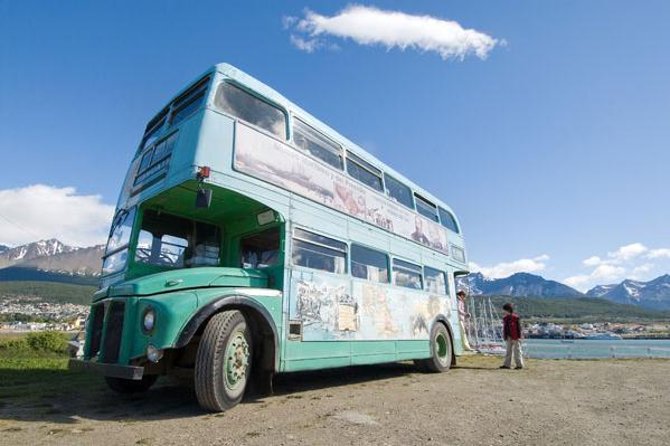
The bus itself is part of the experience. It has old-fashioned charm, though the tradeoff is a cramped feel, narrow stairs, and a slow pace. I would choose the upper deck for views in good weather and the lower deck for warmth, rain protection, or a smoother ride.
Is $32 a fair price?
At $32 per person, this is not the cheapest way to see Ushuaia. A walk through the center costs nothing, and a taxi can be better value if you are traveling with several people and want to visit only one or two places.
The bus earns its price through convenience. In about 70 minutes, you cover central landmarks, hillside viewpoints, residential districts, a river, the former prison route, Laguna del Diablo, and the waterfront. You also avoid arranging separate transport to the higher parts of town.
I see the strongest value for three types of people:
- You have only a few hours in Ushuaia.
- You want an orientation ride before exploring independently.
- Rain, steep streets, or limited mobility make a long walking route less appealing.
The value drops if you expect a full hop-on, hop-off service, long stops, or detailed guiding at every site. The buses may not arrive frequently enough for easy hopping on and off, and some stops are so short that you mainly take a picture before moving on.
I would not book this as your only cultural activity in Ushuaia. Pair it with a proper museum visit, especially if the city’s prison history or maritime past interests you.
Timing, weather, and seasonal changes
Multiple departure times make this easy to fit around a ship schedule or other activities. The ride begins and ends at Civic Plaza on Avenida Maipú, so allow time to reach the meeting point yourself. The tour does not include hotel transport.
The double-decker operates from October through April. That is the period when you can expect the open-top city bus format and English and Spanish guide support in summer.
During the winter season, the experience changes to a Bondi 4×4 and operates in Spanish only. If you need English commentary, plan for the summer operating season or confirm language arrangements before booking.
Good weather is required. If poor conditions cancel the ride, you are offered another date or a full refund. The standard booking is otherwise non-refundable and cannot be changed, so check your plans carefully before paying.
Most people can participate, and the meeting point is near public transportation. The narrow stairs and bumpy upper deck are the main practical concerns. I would choose the lower level if you have difficulty climbing stairs or prefer a steadier ride.
Who should book this Ushuaia bus tour?
I would recommend it to first-time visitors who want to get their bearings fast. It is also a sensible choice during a short port call, when a full-day trip is impossible but you still want to see more than the central shopping streets.
Families may appreciate the simple format and short duration. Solo visitors can cover distant viewpoints without arranging a taxi. Couples who want an easy scenic ride will likely enjoy the harbor views and old-style bus.
I would be more cautious if you are an experienced museum visitor, a serious history enthusiast, or someone expecting a polished modern bus. You may find the narration too light and the vehicle too basic. If the Malvinas Memorial, Prisoners’ Road, or the End of the World Museum is your main reason for booking, confirm exactly which stops are operating that day.
Should you book it?
Book this for orientation, scenery, and efficiency, not for deep interpretation. The route gives you a broad picture of Ushuaia in roughly an hour, with especially good value in the hilltop views and the variety of neighborhoods covered.
Skip it if you have several days and enjoy walking steep streets at your own pace. For most first-time visitors with limited time, though, $32 buys a pleasant introduction and a useful map in your head. Just bring rain protection, do not expect every advertised stop to remain unchanged, and treat the commentary as a helpful overview rather than the final word on Ushuaia’s past.
FAQ
Where does the Ushuaia double-decker bus tour begin?
The tour begins at Civic Plaza Ushuaia, along Avenida Maipú 420 to 498 in Ushuaia, Tierra del Fuego. The tour also ends back at the meeting point.
How long does the tour last?
The ride lasts approximately 1 hour and 10 minutes.
How much does the tour cost?
The listed price is $32 per person.
Is the tour available in English?
During the summer season, a professional English and Spanish-speaking guide is included. Recorded English and Spanish commentary may also be used. In winter, the Bondi 4×4 version operates in Spanish only.
Which other languages are available?
German, Chinese, Russian, Italian, French, and Portuguese audio equipment is available at each seat. You need to bring your own headphones with a standard jack.
When does the double-decker version operate?
The double-decker bus operates from October through April. During winter, the vehicle changes to a Bondi 4×4.
Does the tour include hotel pickup?
No. Hotel pickup and drop-off are not included. You need to reach the Civic Plaza meeting point independently.
Just added in Ushuaia
- 5-Day Premium Patagonia Discovery: El Calafate & Ushuaia★ 5.0 · 7 reviews
- 13-Day Best of Patagonia Tour from El Calafate to Ushuaia: Los Glaciares, Torres del Paine and Tierra del Fuego National Parks★ 4.5 · 39 reviews
- Tierra del Fuego Park & Train Tour for Cruisers (no tickets)★ 4.2 · 35 reviews
- Private Experience “Tierra del Fuego” National Park★ 4.7 · 3 reviews
- Tierra del Fuego National Park★ 4.5 · 4 reviews
- Ushuaia 4WD Off-Road Adventure: Hidden Lakes & Argentine BBQ★ 4.5 · 6 reviews
- Ushuaia: Tierra del Fuego National park Car Tour★ 5.0 · 1 review
- Laguna Esmeralda Confort (trekking + lunch at the refuge)★ 5.0 · 1 review
Ushuaia Tours, compared.
National Park & Train of the End of the World Tour
Read our review →

Beagle Channel & Sea Wolves Island Catamaran Cruise
Read our review →
National Park and Train Trip End of the World Guided Tour
Read our review →
Browse the lists this tour appears in