
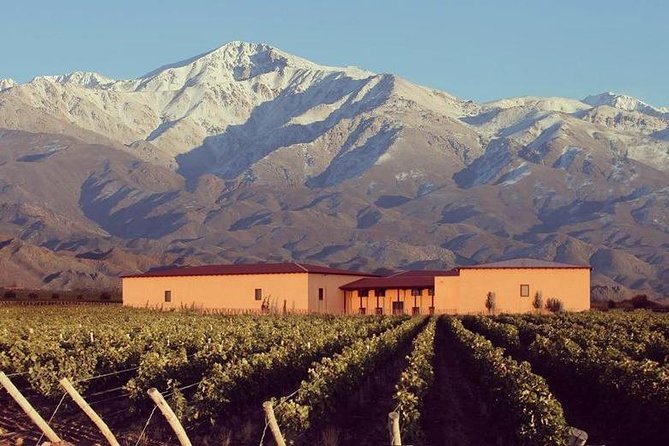
Reviewed · ARGENTINE WINE TOURS
Vineyards with Wine Tasting in Mendoza
Mendoza turns desert into wine. This half-day outing makes that transformation easy to understand, with visits to wineries in Luján de Cuyo and Maipú, tastings, and an olive oil stop. I like the included hotel transport and the chance to compare older, organic, artisanal, and modern production styles without arranging several taxis or appointments.
I also like the small maximum group of 20 and the friendly guides frequently praised by name, including Carolina, Flor, Federico, and Candeia. The main caution is language: the tour guide speaks English, but English support at each winery is not guaranteed, so some explanations may be mostly in Spanish.
In This Review
- Key points to know before booking
- Why Mendoza’s vineyard circuit matters
- The 2:30 pickup and the ride out of Mendoza
- Luján de Cuyo: the setting for Mendoza’s wine story
- Inside the winery: from grape to bottle
- Tastings: pleasant variety, not a guaranteed wine pilgrimage
- Maipú and the olive oil surprise
- Timing, group size, and the real value of $42
- The guides can make or break the afternoon
- What to expect from the overall atmosphere
- Practical advice before you go
- Should you book this Mendoza wine tour?
- FAQ
- Where does the tour take place?
- How long does the experience last?
- What time does pickup begin?
- How many wineries will I visit?
- Which wineries might be included?
- Is the olive oil tasting included?
- Is the tour conducted in English?
- Is lunch included?
- How large is the group?
- Can I cancel for a refund?
Key points to know before booking
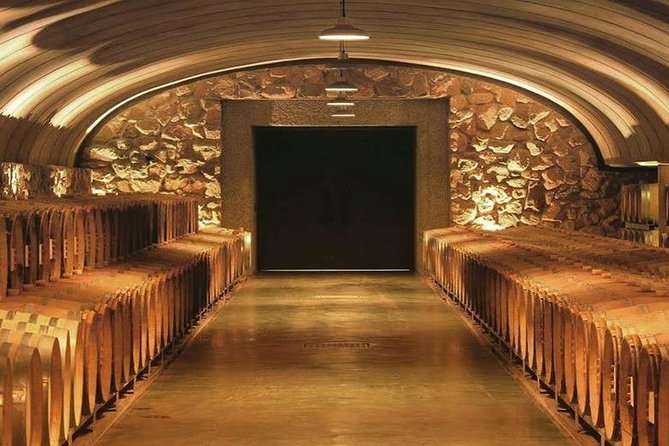
- Two winery visits are officially promised: The operators select two from six options, ranging from organic Familia Cecchin to industrial Vistandes and sweet-wine producer Florio.
- The olive oil stop adds welcome variety: One producer, Pasrai or Centenario, is selected at random, with an explanation and tasting.
- Hotel pickup keeps the afternoon simple: Transfers are included from centrally located Mendoza hotels.
- The experience is social and shared: Groups can include up to 20 people, with commentary on the drive and guided visits at the wineries.
- English coverage can vary: English is specifically provided at the wineries, olive oil factory, and important points, but not necessarily throughout every presentation.
- Eat before departure: Lunch is not included, and the five-hour schedule offers tastings rather than a meal.
Why Mendoza’s vineyard circuit matters
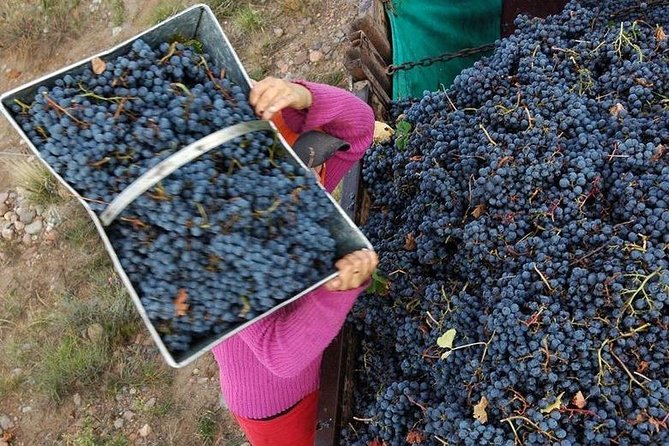
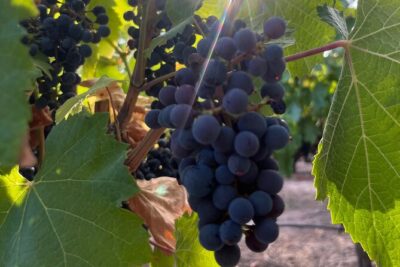
Mendoza is not simply a place where grapes happen to grow. The area began as a dry desert, made productive through irrigation channels and ditches linked to techniques inherited from Indigenous communities. Immigrants later developed the agricultural economy, turning carefully watered soil into vineyards and olive groves.
That background gives the drive more meaning. You are not just moving between tasting rooms. You are seeing how water, labor, migration, and winemaking helped create one of Argentina’s best-known wine regions.
The tour focuses on two nearby wine areas, Luján de Cuyo and Maipú. The exact order and winery selection can vary, so I would treat the outing as an introduction to Mendoza’s wine culture rather than a carefully tailored visit to one particular estate.
That distinction matters. If you want a private tasting of a specific Malbec producer, this is not the right format. If you want a practical first look at how local wine and olive oil are made, the route gives you a lot in one afternoon.
More Food and Wine Tastings in Mendoza
- From Mendoza: 3 Wineries, Olive Oil Factory Tour & Tasting
★ 4.6 · 901 reviews - Tour and Tasting in 3 Wineries and 1 Olive Tree in Maipu
★ 5.0 · 167 reviews - 3h Cooking Class in Mendoza with 7 Recipes & Bottomless Drinks
★ 5.0 · 125 reviews
The 2:30 pickup and the ride out of Mendoza
Pickup is scheduled from selected downtown Mendoza hotels. The information gives a meeting time of 2:00 p.m. and says hotel pickup begins at 2:30 p.m., so I would confirm the exact time and location when you book. Pickup times can vary by hotel and route.
Transport is one of the strongest parts of this experience. You avoid hiring a driver, finding rural addresses, or trying to fit several tastings into a day on your own. A professional driver and tour guide handle the movement between stops, and several people particularly praised the comfort of the shuttle and the care shown by drivers such as Martín and Esteban.
The drive is also part of the lesson. Commentary covers Mendoza, its wine production, and the areas you are visiting. That information helps you understand the region before you enter a winery, though it may be delivered mainly in Spanish depending on the group and guide.
The vehicle format also shapes the day. With a maximum of 20 people, this is not an intimate private tour, but it is smaller than a large coach excursion. You will share tastings and presentations with an international group, which can be part of the fun. It also means the schedule is fixed, and you cannot linger at one stop if you prefer a particular bottle or conversation.
Luján de Cuyo: the setting for Mendoza’s wine story
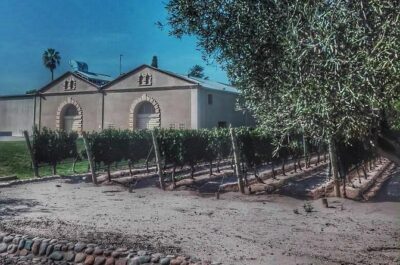
Luján de Cuyo is presented as the first major wine area on the route. The focus here is the way irrigation made cultivation possible and how immigrant communities helped build Mendoza’s wine industry.
You may visit one of several different types of producers during the afternoon. The possible wineries include:
- Familia Cecchin, known for organic production
- Esencia, described as historic
- Viña El Cerno, an artisanal winery
- Domiciano, associated with night harvesting
- Vistandes, an industrial producer
- Florio, focused on sweet wines
The random selection is both the tour’s appeal and its limitation. You could see an organic operation one day and a more industrial facility the next. That variety gives you a broader picture of Mendoza, but you cannot choose a favorite style in advance.
Familia Cecchin received especially warm praise for its organic approach and its English-speaking guide. One visitor also found the old winery and wine museum, more than a century old, especially educational. If your assigned stops include an older property, expect the visit to focus as much on local wine culture and working methods as on the tasting itself.
Other stops may feel more functional than picturesque. Vistandes, for example, was described as basic, with an uncomfortable tasting area on one occasion. I would keep expectations realistic: this is a rotating selection of commercial wine producers, not a guaranteed visit to Mendoza’s most beautiful estates.
Inside the winery: from grape to bottle
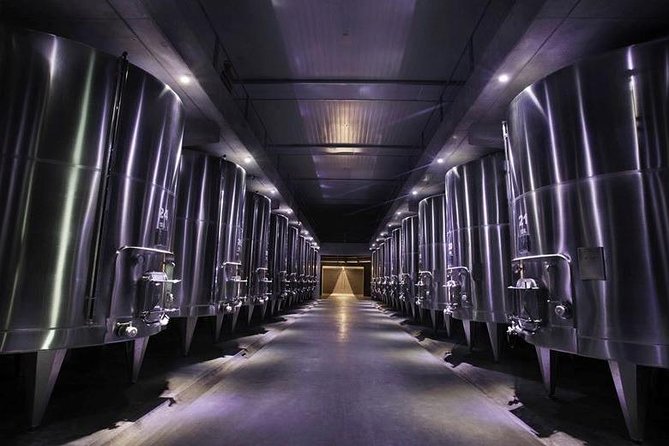
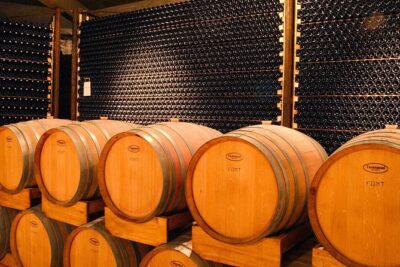
At the winery visits, guides and oenologists explain the stages of production. You can expect discussion of vinification, bottling, and labeling, with attention to the contrast between traditional methods and newer technology.
This is useful if you are new to wine. You will hear how a producer’s choices affect the final bottle, then taste the result rather than treating the cellar as a museum. The best visits connect the equipment and methods to the wine in your glass.
The quality of the explanation depends heavily on the local guide assigned to the stop. Several outings had strong English support and clear presentations. Guides at individual wineries were praised for their expertise and friendliness, while other visits were rushed or difficult to follow.
This is the most important point for English speakers. The general tour may be sold with English assistance, but the local winery presentation may still be conducted mostly in Spanish. One especially unhappy experience involved excellent English at the first winery, followed by little understandable English at later stops. The operator acknowledged this problem and said it had reviewed the language arrangements.
I would not book this tour expecting a fully English-language seminar at every stop. Instead, think of it as an English-supported group outing with variable interpretation. If you need every detail explained in English, ask before paying which wineries are operating that day and whether each one has an English guide.
More Wine Tours in Mendoza
- All Day, Small Group, Luxury Wine Tour with Gourmet Lunch
★ 5.0 · 1,040 reviews - Mendoza: Half-Day Wine Tour with Tastings
★ 4.3 · 727 reviews - Half Day Winery Tour
★ 4.5 · 533 reviews - Malbec Experience in Bodega Tierras Altas
★ 5.0 · 440 reviews
Tastings: pleasant variety, not a guaranteed wine pilgrimage
Wine tastings are included, and the range can be broad. Depending on the wineries selected, you might sample organic wines, small-production bottles, industrial wines, night-harvest wines, or sweet wines.
Several people enjoyed the wine and found the tastings varied and high quality. Others felt the wines were ordinary and said the visits seemed designed more for tourism and sales than for serious wine study. Both impressions can be true. The experience offers access to several producers at a low price, but the tastings are part of a scheduled group program.
At busy wineries, the tasting can feel hurried. Large groups may move through in sequence, and the guide may need to keep everyone on schedule. If you are deeply interested in viticulture or tasting technique, you may want a smaller specialist tour instead.
For a first introduction, though, the format works well. You can compare different production styles without committing to a full-day wine program. I especially like the possibility of seeing an organic winery and a modern industrial facility on the same afternoon, since the contrast can teach you more than visiting two similar properties.
The tour does not include lunch, and no food is promised with the tastings. Eat before pickup. This is not a meal-and-wine excursion, and waiting until the end can leave you more focused on hunger than on the Malbec.
Maipú and the olive oil surprise
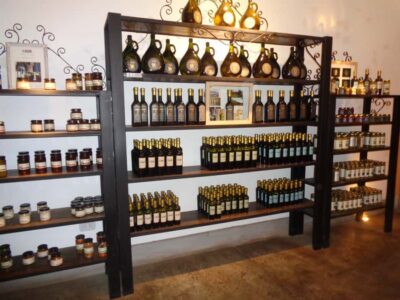
The Maipú portion adds a second side of Mendoza’s agricultural identity. Along with the winery visits, the group stops at one olive oil producer, selected from Pasrai or Centenario.
You will learn about the process of making olive oil and then take part in a tasting. For some people, this is a highlight. The olive stop breaks up the wine schedule and shows how the same irrigated region supports another important crop.
It can also catch people off guard. The olive oil visit is not emphasized as strongly as the wine portion, so some participants arrive expecting only vineyards. Others found the stop very worthwhile, especially when the presentation was clear and the tasting was well handled.
The quality of this stop varies too. One visit was described as crowded and disorganized, while another was considered a very good part of the afternoon. I would see it as a useful bonus, not the main reason to book.
If you enjoy food production, oils, and regional agriculture, the visit adds real value. If you only want wine, it takes time away from another cellar and may feel like a sales-oriented detour.
Timing, group size, and the real value of $42
At $42 per person, the tour is priced as an accessible introduction rather than a luxury wine day. The fee includes transfers from central Mendoza hotels, a professional tour guide, visits to the wineries, and wine tastings. The olive oil visit and tasting are also part of the planned route.
That is good value if you would otherwise pay separately for transport and tastings. A half-day schedule also leaves your morning or evening free, which helps if you are fitting Mendoza into a short stay.
The published duration is about five hours. Pickup is listed for the afternoon, with a return to Mendoza around 8:00 p.m. The timing may feel longer than a simple five-hour tasting once hotel pickups and rural driving are included, so do not schedule a tight dinner reservation immediately afterward.
The maximum group size is 20. That is manageable, but it is still a group tour. You will not control the pace, choose every winery, or receive the same level of attention as on a private outing.
The value is strongest for:
- First-time wine visitors
- Couples wanting an easy afternoon outside Mendoza
- People interested in both wine and olive oil
- Visitors without a rental car or private driver
- English speakers comfortable with some uncertainty in local-language presentations
- Anyone who wants several production styles in one outing
The value is weaker for serious wine collectors, people seeking a specific vineyard, and anyone who expects a quiet, fully English-language tasting at every stop.
The guides can make or break the afternoon
The tour’s general guide plays a major role because the ride connects several separate visits. Strong guides have been praised for being warm, clear, and helpful, with Carolina, Flor, Federico, and Candeia receiving particular appreciation.
A good guide can explain the region, smooth out parking or pickup problems, and help bridge language gaps. One guide was credited with quickly handling a parking issue, which is exactly the kind of small practical help that keeps a group day moving.
The local winery guides matter just as much. At their best, they explain the production clearly and make the tasting feel like part of the visit. At their worst, the presentation can be brief, rushed, or almost entirely in Spanish.
I would pay attention to this difference when choosing the tour. The general guide may be excellent, but that does not guarantee identical English service at every winery. The experience depends partly on the random pair of producers and partly on who is working that day.
What to expect from the overall atmosphere
This is a social outing with people from different countries and backgrounds. The shared shuttle and group tastings make it easy to meet others, and several accounts describe pleasant groups and friendly staff.
The mood is usually relaxed, but the day can feel busy when several tour groups arrive at the same facility. Some presentations may move quickly, and the olive oil producer or winery may have a sales component. That is common on commercial tasting routes, but it may disappoint you if you are looking for a slow, reflective visit in the countryside.
The scenery remains a strong part of the appeal, including outside the summer season. Mendoza’s agricultural setting gives the ride a sense of place, while the cellar visits show how different producers use the region’s resources.
I would call the experience educational in a practical way. You learn enough to recognize differences between organic, artisanal, historic, industrial, and sweet-wine production. You do not get a specialist course in terroir or a private conversation with a winemaker.
Practical advice before you go
Confirm your hotel pickup time. The information lists both a 2:00 p.m. meeting time and a 2:30 p.m. pickup, so it is worth checking the exact instruction for your hotel.
Eat before the tour. Lunch, food, and drinks beyond the listed tastings are not included.
Ask about English support if language is important to you. The English-speaking guide is specifically available at the wineries, olive oil factory, and key points, but the individual winery presentations may not all be fully translated.
Do not assume you can choose the wineries. Two are selected at random from six listed options, and one olive oil producer is selected from two.
Leave room in your evening schedule. The return to Mendoza is listed at about 8:00 p.m., though the exact arrival can depend on pickups, traffic, and the route.
Cancellation is free up to 24 hours before the start time. Cancellations or changes made less than 24 hours ahead are not accepted for a refund.
Should you book this Mendoza wine tour?
I would book it if you want a low-cost, easy introduction to Mendoza’s wine country and like the idea of adding olive oil to the afternoon. The hotel transfer, included tastings, small maximum group, and mix of possible producers make the $42 price attractive.
I would skip it if your priority is a polished English-language wine education, a specific winery, a long meal, or a private pace. The random selection and uneven language support are real tradeoffs.
For most first-time visitors, this is a sensible way to get oriented. Go in expecting a varied group excursion, eat beforehand, confirm the language arrangements, and treat the olive oil stop as part of the regional story rather than an unwanted interruption. That approach gives you the best chance of enjoying the afternoon.
FAQ
Where does the tour take place?
The tour visits wineries in the Luján de Cuyo and Maipú areas near Mendoza, along with one olive oil producer.
How long does the experience last?
The stated duration is approximately five hours. Pickup is in the afternoon, and arrival back in Mendoza is listed for around 8:00 p.m.
What time does pickup begin?
The information lists a 2:00 p.m. start time and says pickup from selected hotels begins at 2:30 p.m. Confirm the exact pickup time for your hotel after booking.
How many wineries will I visit?
The tour officially includes two wineries. They are selected at random from six possible producers. Some past itineraries have included three wineries, so confirm the current route if the exact number matters to you.
Which wineries might be included?
The possible wineries are Familia Cecchin, Esencia, Viña El Cerno, Domiciano, Vistandes, and Florio.
Is the olive oil tasting included?
Yes. The route includes one olive oil producer, selected from Pasrai or Centenario, with an explanation of production and a tasting.
Is the tour conducted in English?
An English-speaking guide is provided at the wineries, olive oil factory, and important points during the tour. However, the local winery presentations may not always have full English support, so English coverage can vary.
Is lunch included?
No. Lunch, food, and drinks not specifically mentioned are excluded. Eat before pickup.
How large is the group?
The tour has a maximum of 20 participants. You will travel and visit the wineries as part of a shared group.
Can I cancel for a refund?
Yes. You can cancel at least 24 hours before the local start time for a full refund. Cancellations or changes made less than 24 hours before the experience are not accepted for a refund.
Just added in Mendoza
- Zuccardi Legacy: A Journey Through Uco Valley’s Finest★ 5.0 · 5 reviews
- Your Personal Expert Concierge in Mendoza 24/7★ 5.0 · 1 review
- Wines and Sparkling★ 5.0 · 2 reviews
- Wine Idols: Meet El Enemigo by Alejandro Vigil★ 4.6 · 6 reviews
- Wine Icons: Meet the sparkling world of Chandon★ 5.0 · 3 reviews
- Your Wine Adventure at Luján de Cuyo★ 5.0 · 1 review
- Wine and Chocolate Bike Tour: ride, taste, lunch, vineyards.★ 4.1 · 10 reviews
- Visit & Tasting at Salentein + Lunch at La Azul★ 4.1 · 12 reviews
Argentine Wine Tours, compared.
All Day, Small Group, Luxury Wine Tour with Gourmet Lunch
Read our review →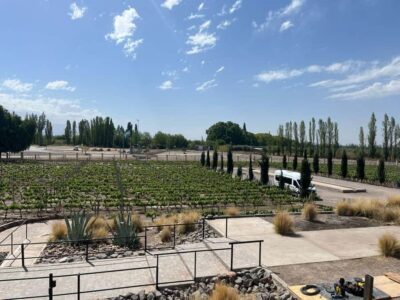
Argentine Experience: Immersive Dinner & Wine Pairing in Iguazú
Read our review →
Browse the lists this tour appears in