
Reviewed · TREKKING AND HIKING TOURS
Ushuaia: Ojo del Albino – Full day trekking
The glacier is only the beginning. This demanding day from Ushuaia combines Esmeralda Lagoon, peat valleys, Fuegian forest, and the Ojo del Albino Glacier in one long trek. I like the changing scenery, and I like the small group size, limited to five people.
The main drawback is the effort required. You will cover 18 kilometers with 810 meters of uphill gain, including mud, boulders, snow, and steep rocky sections. This is not a gentle walk with a glacier view at the end.
In This Review
- Key points to know before you go
- What the Ojo del Albino trek is really like
- The 7:30 pickup from Ushuaia
- The easier opening through forest and valley
- Esmeralda Lagoon, the first major stop
- Leaving the trees for the rocky ascent
- Reaching Ojo del Albino Glacier around noon
- Lunch, timing, and the return trip
- How the guides affect the experience
- Is $200 a fair price?
- What to bring for an eight-hour mountain day
- Who should book this trek?
- Should you book Ojo del Albino?
- FAQ
- How long is the Ojo del Albino trek?
- How much uphill walking is involved?
- What sights does the hike visit?
- What time does pickup begin?
- Is transportation included?
- What languages are available?
- What happens if the weather is bad?
Key points to know before you go
- 18 kilometers and 810 meters uphill: Expect a serious full-day hike, not a casual outing.
- Two major sights in one day: The route reaches Esmeralda Lagoon and the Ojo del Albino Glacier.
- Constantly changing ground: You move from humid forest and peat bogs to bare rock, snow, and glacier terrain.
- Small groups matter: With no more than five participants, the guide can offer close help on difficult sections.
- Good support is included: Transport, a guide, trekking poles, lunch, a hot drink, and personal insurance are part of the $200 price.
- Bring proper clothing: Sunglasses, a hat, hiking shoes, sunscreen, a jacket, gloves, socks, and a refillable water bottle are mandatory essentials.
What the Ojo del Albino trek is really like
This is one of the more demanding day hikes you can take from Ushuaia. The route gives you far more than a single viewpoint, but it asks for steady effort in return.
The total distance is 18 kilometers, and the uphill gain is 810 meters. Those numbers matter. The route may begin comfortably, but the final approach to the glacier involves loose and uneven ground, large rocks, snow, and careful footwork.
I would think of this as a mountain day rather than a sightseeing excursion. You need a reasonable fitness level, hiking experience, and the patience to keep moving when the weather or ground turns difficult.
The reward is the variety. You pass through several types of Fuegian scenery in a single outing: forest, open peat valleys, high Andean vegetation, exposed rock, snow, and the glacier lagoon. The changing ground also gives the day a clear sense of progress. You are not simply walking to a viewpoint. You are moving from the lower valley toward a colder, more exposed world.
More Trekking Tours in Ushuaia
- From Ushuaia: Tierra del Fuego Emerald Lagoon Trekking Tour
★ 4.9 · 271 reviews - Ice Trekking Vinciguerra Glacier and Laguna de los Témpanos Premium
★ 5.0 · 236 reviews - Emerald Lagoon Trekking
★ 5.0 · 135 reviews
The 7:30 pickup from Ushuaia
The day begins with pickup from your hotel or accommodation at about 7:30 in the morning. A short transfer of roughly 25 minutes brings you to the hiking area.
That included transport is useful. You do not need to arrange a rental car or work out how to reach the trailhead before sunrise. It also keeps the day focused, since the guide and transfer are handled together.
At 8:00, the hike begins. Since the full route lasts around eight hours, an early start is necessary. You should be ready before pickup time with your hiking shoes on or immediately available, your water bottle filled, and your clothing arranged in layers.
The small group limit is one of the strongest practical features here. Five people is small enough for the guide to keep an eye on the group, adjust the pace when needed, and help with rough sections. That matters much more on a rocky ascent than it does on a flat city tour.
The easier opening through forest and valley
The first part of the trail is described as easier than the climb that follows. You begin in humid forest, where mud can be part of the experience. Do not expect a dry, polished path.
This opening section lets you settle into the day. You can find your rhythm, see how your boots handle the ground, and make sure your clothing is comfortable before the route gets more exposed. The forest also gives you a close look at the lower ecosystems around Ushuaia.
The trail then reaches valleys of peat bogs. These open areas create a sharp contrast with the trees. The ground can be wet, and the footing may require care, but the views open up as the vegetation becomes less dense.
This is one reason I find the route more rewarding than a short glacier walk. The setting changes in stages. You get a sense of the Fuegian Andes from the valley floor before the trail climbs into the high terrain.
Your guide carries trekking poles for the group, which should help with balance in muddy and uneven areas. The poles are especially useful if the ground is soft or if rain has made the route slick.
Esmeralda Lagoon, the first major stop
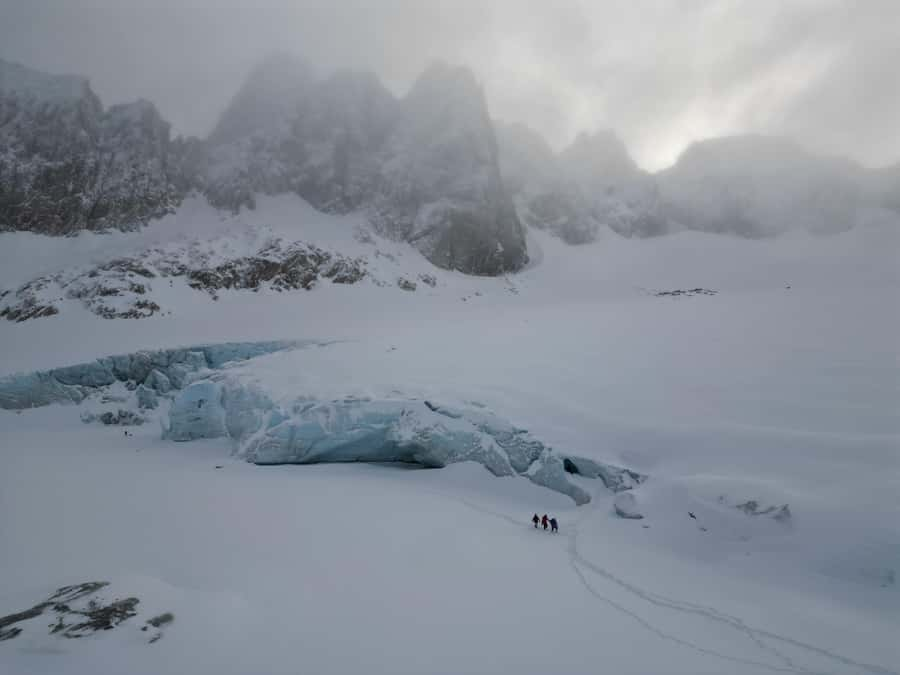
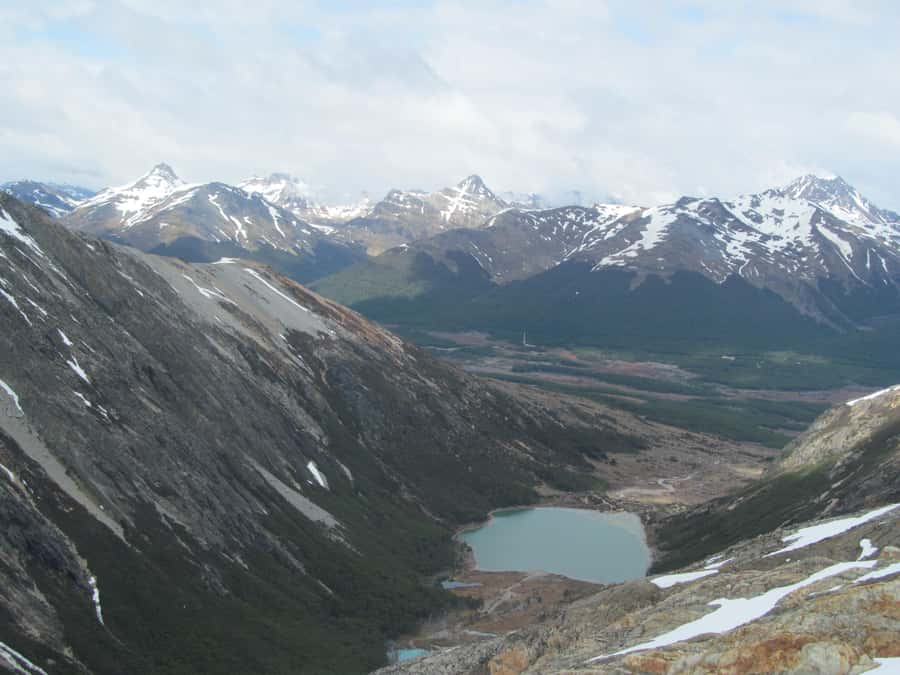
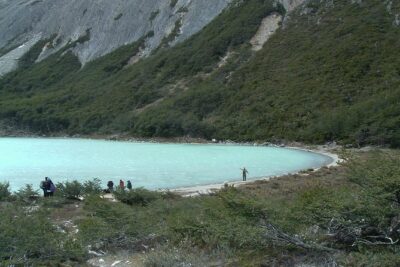
Esmeralda Lagoon is one of the two main sights on the route. It appears before the hardest part of the hike, giving you a clear early goal and a chance to enjoy a major natural feature without yet being at the highest point.
The lagoon is reached through the lower forest and valley section. Its setting helps you see how the route connects the different parts of the area. You start among trees and wet ground, then arrive at open water framed by the Fuegian Andes.
The lagoon is not the end of the day, and that is important when planning your energy. Some people might be tempted to treat it as the finish because it is such a notable stop. In this excursion, it is only the first landmark before the demanding ascent toward the glacier.
I would use this point to check your pace, drink some water, and make sure your layers are working. The climb after the forest becomes more physical, so it is better to make small adjustments here than to wait until you are on the rocks.
A completely different kind of day:
- Ushuaia: National Park & Train of the End of the World Tour
★ 4.5 · 811 reviews - End of the World Train Ticket
★ 4.0 · 685 reviews - Beagle Channel Navigation with Minitrekking
★ 5.0 · 642 reviews - Ushuaia: Penguin Watching Tour by Catamaran
★ 4.5 · 439 reviews
Leaving the trees for the rocky ascent
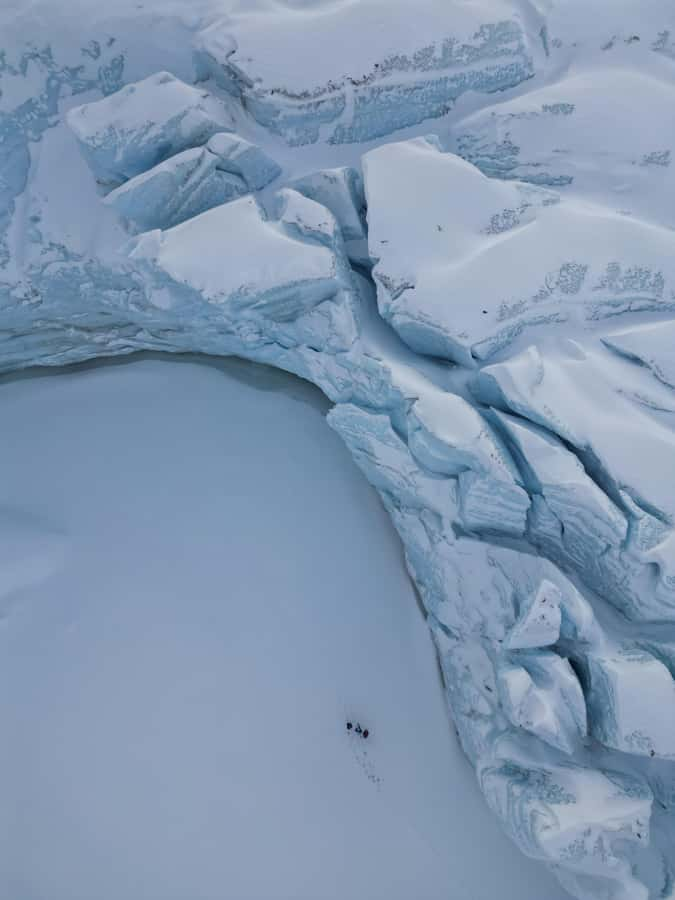
After the forest, the route passes beyond the vegetation limit. The character of the hike changes quickly. Trees give way to high Andean vegetation and then to a rocky area where the ascent toward Ojo del Albino begins.
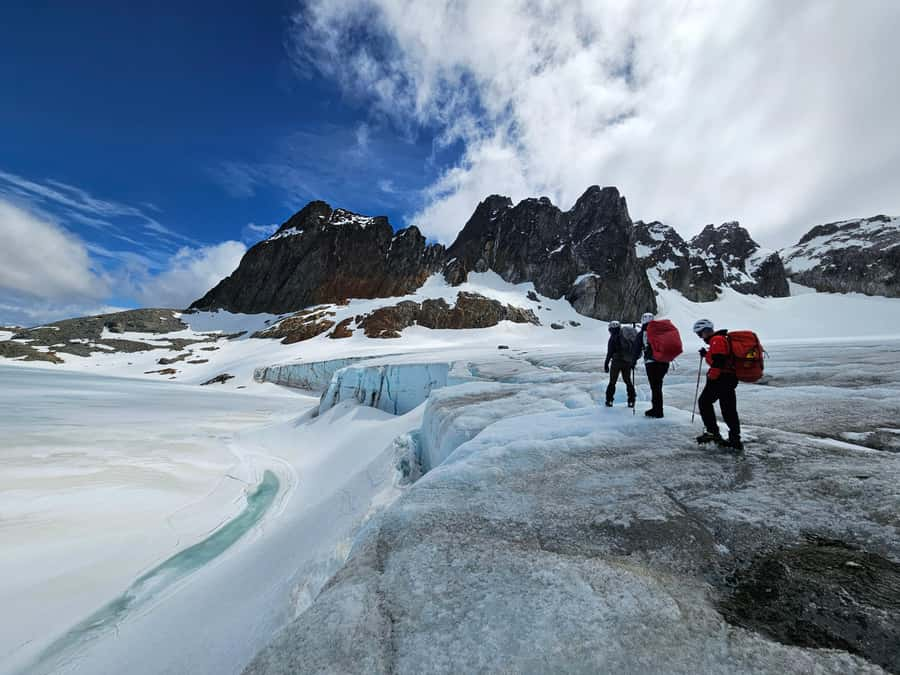
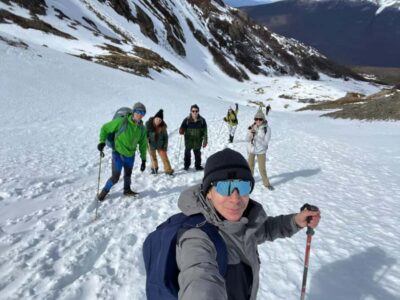
This is the section that separates a serious hike from a simple nature walk. You cross boulders of different sizes, and the route requires careful movement rather than fast walking. You may need to place each foot deliberately, especially on wet rock or snow.
The ground is not described as technical climbing, but it is clearly demanding. A good fitness level helps, but experience with uneven mountain terrain is also valuable. The tour specifically excludes people without experience and people with a low fitness level for good reason.
Your guide is particularly important here. The group stays together, and the guide can help you choose a safer line over the rocks. Past feedback highlights the care shown by guides on ascents, rock, and snow. Jessica specifically praised the smooth handling of difficult sections, while Alan described Tobias as helpful with people of different ability levels.
That does not make the route easy. It means you have support while dealing with a route that still requires your own effort and attention.
Reaching Ojo del Albino Glacier around noon
The planned arrival at the foot of the glacier is about 12:00. By then, you will have moved through almost every type of ground the outing offers.
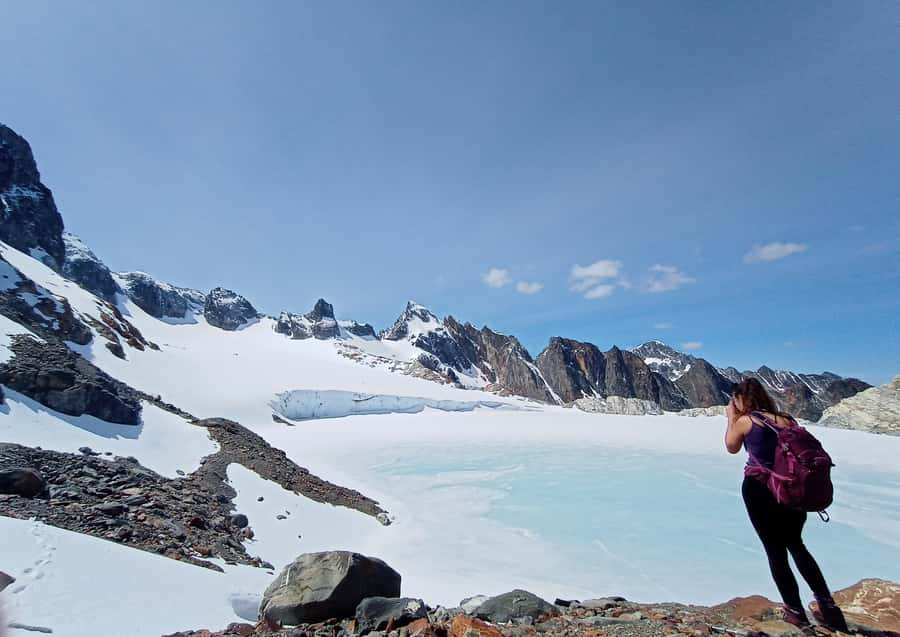
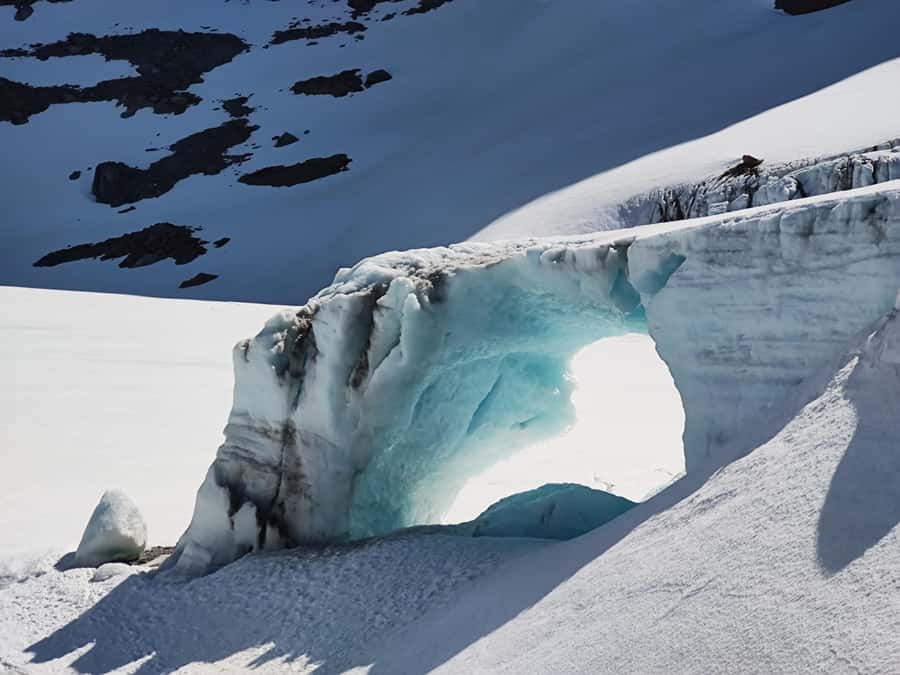
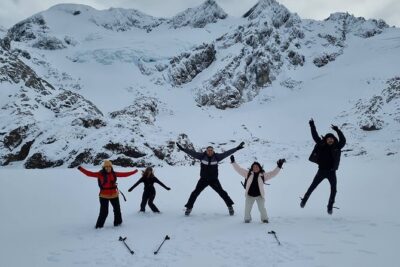
Ojo del Albino Glacier and its lagoon are the high point of the day in both senses. The glacier gives the route its name, while the lagoon below it adds open water to the snow and rock. Together, they create the most striking views of the Fuegian Andes on the trek.
The setting can feel remote because the scenery has become much barer and more exposed than it was in the forest. You are no longer looking through trees or across a wet valley. You are among boulders, snow, ice, and high mountain vegetation.
The weather can also feel more serious here. The excursion runs in rain or shine, and one of the strongest practical tips from the available feedback is to dress warmer than you think. A July outing in snow was described as a once-in-a-lifetime experience, but the same comment came with a clear warning to bring warm clothing.
A hot drink is included, and it can be especially welcome at the glacier. One guide, described as excellent by a participant, surprised the group with hot tea at the top. The exact drink is included as part of the package, but you should not depend on it as your only source of warmth. Your jacket, gloves, socks, and proper footwear still do the main work.
Lunch, timing, and the return trip
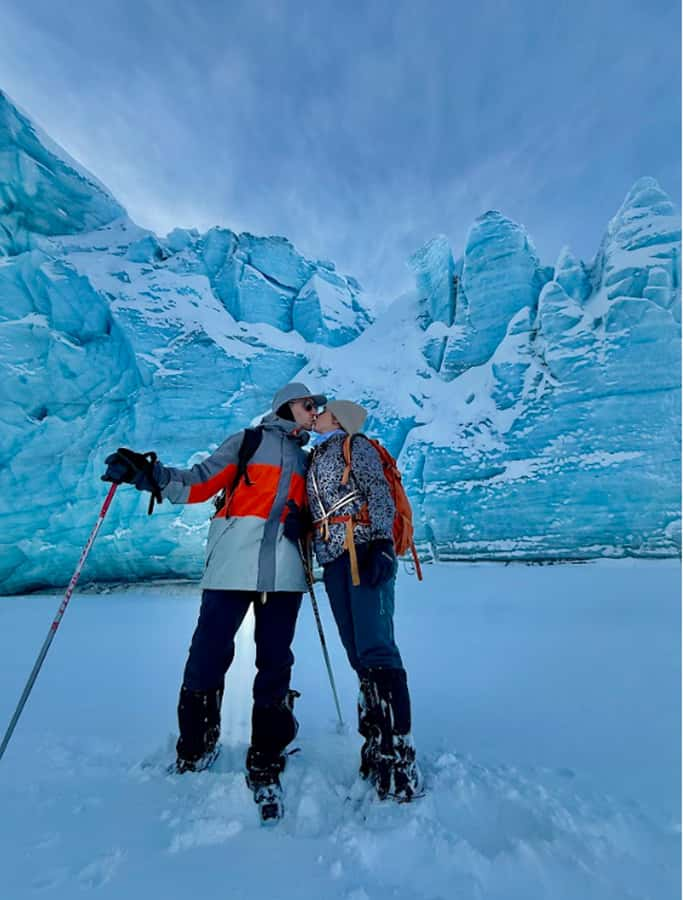
A lunch box is included, along with the hot drink. The schedule allows roughly an hour around the glacier before the return begins at about 13:00.
That hour is not simply spare time. It gives you a chance to eat, rest, take in the views, and recover before facing the same distance in reverse. On a hike this long, a proper pause can make the difference between finishing comfortably and struggling late in the day.
The descent has its own challenges. Going downhill over rocks, snow, and mud can be harder on balance than climbing up. Alan singled out the way down through the snow as a highlight, but you should also expect it to demand concentration.
Trekking poles are useful again here. They can help reduce slips and give your knees some support on uneven ground. The guide may adjust the pace or offer help according to the group, but you still need to move carefully and stay aware of your footing.
The return transfer brings you back to Ushuaia at about 17:30. That makes this a full day away from your accommodation, with little room for another major activity afterward. Plan a quiet evening rather than a packed dinner reservation or late excursion.
How the guides affect the experience
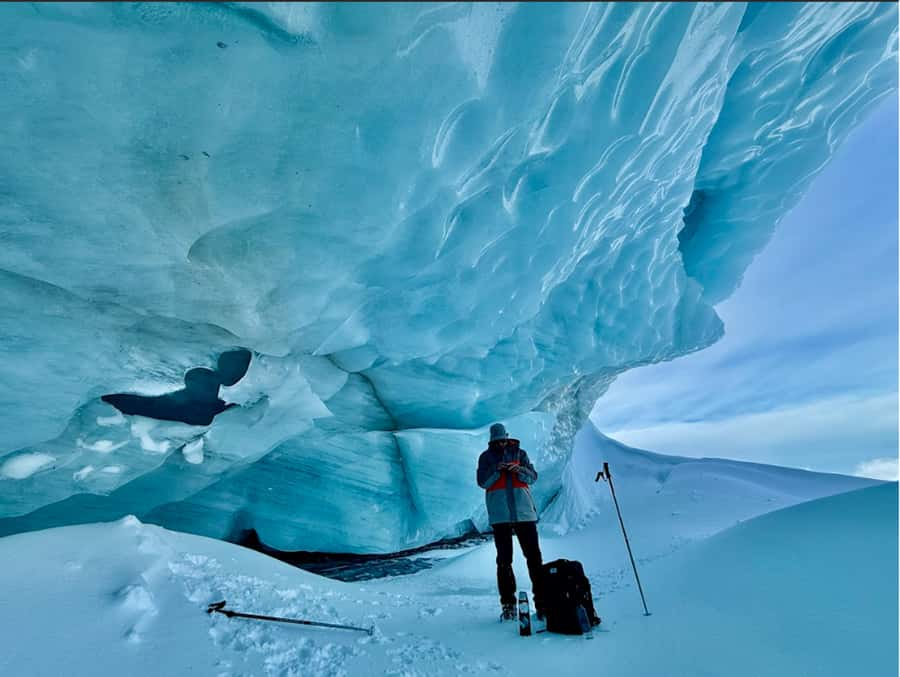
A good guide is important on this route, not just pleasant to have. The trail includes muddy forest, open peat valleys, boulders, snow, and steep sections. Clear advice can help you use your energy well and move more safely.
The guide team works in English, Spanish, French, and German. That makes the outing accessible to a wider range of visitors, but you should choose a language you can follow easily when instructions become important.
Specific guide names connected with strong feedback include Mika and Tobias. Mika was praised for leading a memorable snowy outing, while Tobias helped a family group with different levels of hiking ability. Those details suggest that the guiding style includes practical support, not only facts about the area.
The group size of five gives this support real value. On a large tour, the slowest person can feel pressured and the fastest person can spend long periods waiting. A small group makes it easier for the guide to keep the outing together and respond to individual needs.
Still, you should not book this expecting a private, custom-paced walk for every fitness level. The route remains long and demanding for everyone.
Is $200 a fair price?
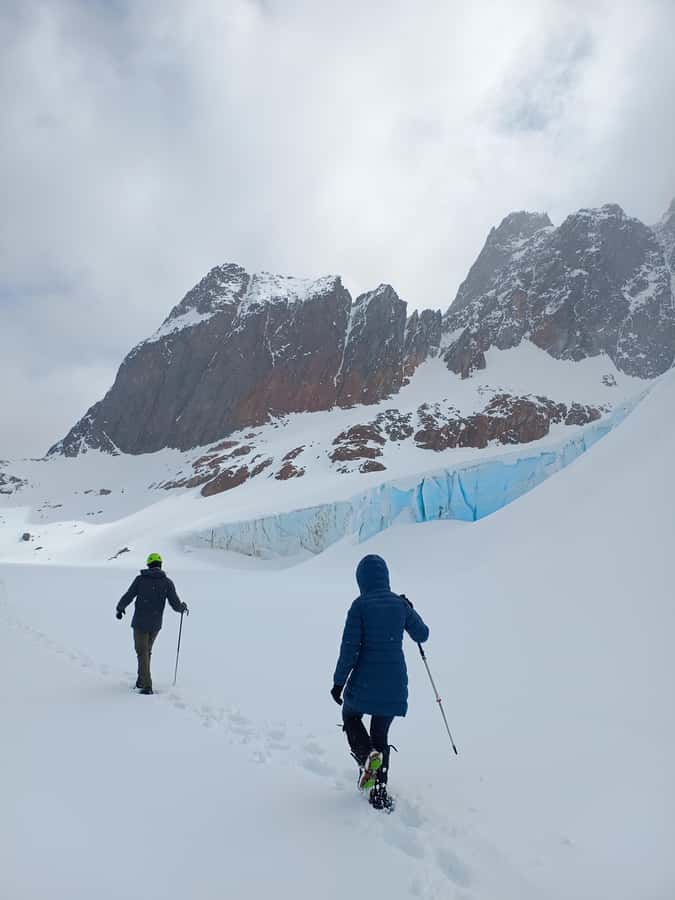
At $200 per person, this is not a cheap half-day activity. It is an eight-hour guided mountain outing with hotel pickup, transport, personal insurance, trekking poles, lunch, and a hot drink.
The value depends on what you would otherwise need to arrange. You would need transportation from Ushuaia, navigation, safety planning, suitable timing, and a way to manage the route between Esmeralda Lagoon and the glacier. The small group also gives you closer guide attention than a standard large coach excursion.
I think the price is easier to justify if you want both major sights in one day and do not want to organize the route yourself. It is less attractive if your main goal is simply to see a lagoon or get a quick glacier photo.
The included equipment is helpful, but it does not replace your own clothing. You must bring the listed items, and anyone arriving without the mandatory gear may be refused participation. That rule is worth taking seriously because conditions can change quickly in the mountains.
Free cancellation is available up to 24 hours before departure, and you can reserve without paying immediately. Those terms give you some flexibility, but they do not remove the need to judge your fitness honestly before booking.
What to bring for an eight-hour mountain day
The required packing list is practical and should be followed closely:
- Hiking shoes
- Jacket
- Gloves
- Socks
- Sunglasses
- Hat
- Sunscreen
- Reusable water bottle
Warm layers are especially important. Snow conditions have been part of the experience, and a participant advised dressing warmer than expected. It is better to carry an extra layer than to spend the glacier stop cold and distracted.
Large bags and luggage are not allowed. Pack only what you need for the hike, and use a small day bag if permitted by the operator. Pets are also not allowed, except for assistance dogs.
Because the excursion operates in rain or shine, rain protection and clothing that can handle damp conditions are sensible choices. The supplied requirements do not promise dry weather, so you should prepare for wet forest, mud, and cold exposure.
Who should book this trek?
I would recommend it to a fit hiker who wants a full mountain day and values changing scenery over comfort. It suits someone who is happy to walk for eight hours and who has experience with uneven ground, mud, snow, and rocky ascents.
It can also work for a family with older teenagers if everyone meets the fitness and experience requirements. The age information is slightly inconsistent: one part says children under 14 are excluded, while another says the tour is unsuitable for children under 13. Confirm the minimum age directly before booking rather than relying on the lower number.
You should skip it if you have mobility limitations, use a wheelchair, weigh more than 115 kilograms, or have a low level of fitness. The route is not suitable for a relaxed stroll, and the terrain would make mobility difficulties especially challenging.
A strong hiker who dislikes small-group outings may also prefer to arrange a private option, though that is not offered here. For most people considering this trip, the real question is not the group format. It is whether you genuinely want 18 kilometers of difficult mountain walking.
Should you book Ojo del Albino?
Book this trek if you want a demanding route with two major natural sights and several distinct types of Fuegian scenery. The small group, included transport, helpful guides, poles, lunch, and hot drink make the $200 easier to defend, especially if you would otherwise need to organize the day yourself.
Do not book it just because the glacier sounds appealing. The glacier is reached only after a long approach and a rocky climb. If you prepare properly, the effort leads to some of the best views in the area, but this is a hike first and a sightseeing trip second.
FAQ
How long is the Ojo del Albino trek?
The full excursion lasts about eight hours, including transportation. The hiking route covers 18 kilometers in total.
How much uphill walking is involved?
The route has approximately 810 meters of positive elevation gain.
What sights does the hike visit?
The trek visits Esmeralda Lagoon and the Ojo del Albino Glacier, including the glacier lagoon.
What time does pickup begin?
Pickup from your hotel or accommodation in Ushuaia is scheduled for about 7:30 in the morning. The hike begins around 8:00.
Is transportation included?
Yes. Transportation from Ushuaia to the hiking area and back is included. Each transfer takes about 25 minutes.
What languages are available?
The live guide may speak English, Spanish, French, or German.
What happens if the weather is bad?
The excursion takes place in rain or shine. You must bring the mandatory clothing and equipment, and you may not be allowed to participate if you arrive without those items.
Just added in Ushuaia
- Ushuaia>YOUR FIRST FUEGIAN SUMMIT – Turquesa-Monte Carbajal★ 5.0 · 2 reviews
- USHUAIA: TREKKING IN LAGUNA DE LOS TÉMPANOS AND VINCIGUERRA GLACIER★ 4.8 · 5 reviews
- Ushuaia: Visit to Escondido and Fagnano Lakes PM★ 4.7 · 6 reviews
- Trekking Esmeralda Lagoon★ 4.8 · 3 reviews
- Ushuaia: Tierra del Fuego National Park Tour with Lunch★ 4.7 · 38 reviews
- Ushuaia: Tour: Beagle Channel Navigation★ 4.7 · 3 reviews
- Ushuaia: Tierra del Fuego National Park Half-Day Tour★ 4.3 · 13 reviews
- Ushuaia: Tierra del Fuego National Park Shore Excursion★ 4.1 · 18 reviews
Trekking and Hiking Tours, compared.
Perito Moreno Glacier Trekking Tour and Cruise
Read our review →
Torres Del Paine Full Day Overland Truck 4×4 from El Calafate
Read our review →
Ice Trekking Vinciguerra Glacier and Laguna de los Témpanos Premium
Read our review →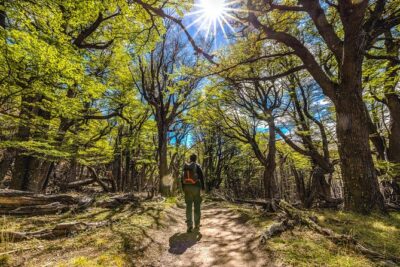
Trekking to Vinciguerra glacier and Tempanos lagoon
Read our review →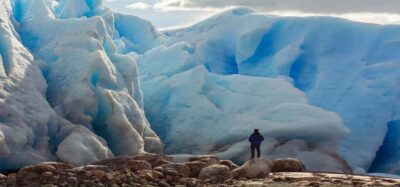
Browse the lists this tour appears in