
Reviewed · SALTA AND JUJUY TOURS
7-Day Best of Salta & Atacama – Humahuaca, Salt Flats, Moon Valley, Tatio Geyser
The Andes save their best surprises for the road. This seven-day journey links Salta and northern Argentina with San Pedro de Atacama in Chile, combining colorful mountains, high-altitude salt flats, desert valleys, geysers, villages, and an international crossing by bus. I like the way the trip handles the complicated parts, including hotels, transfers, guides, and the long ride across Paso de Jama. I also like the small group limit of 14 people, which should make the excursions easier to manage.
The main drawback is the pace. Several days involve eight to ten hours on the road, and the tour reaches high elevations before dropping into the Atacama Desert. You need to be comfortable with long drives, early mornings, cold temperatures, and a schedule that leaves little room for changing plans.
In This Review
- Key points to know before booking
- What this seven-day route actually gives you
- Day 1: A gentle start in Salta
- Day 2: Train to the Clouds country and Salinas Grandes
- Day 3: Seven colors and the Humahuaca Gorge
- Day 4: Crossing Paso de Jama into Chile
- Day 5: San Pedro and the Moon Valley
- Day 6: Tatio Geysers before breakfast
- Day 7: Transfer to Calama Airport
- How the price compares with the effort
- Who should book this route?
- FAQ
- How many nights of accommodation are included?
- Is transportation from Argentina to Chile included?
- Are entrance fees included?
- Does the Moon Valley tour pick me up at my hotel?
- What ages can join the tour?
- Is airport transportation included at the beginning and end?
- Should you book the Best of Salta and Atacama?
Key points to know before booking
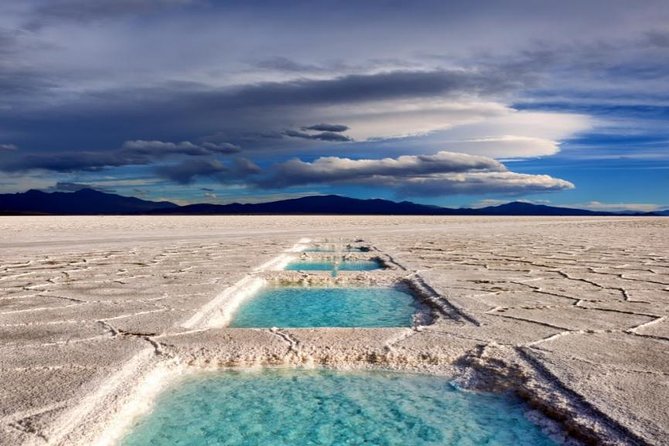
- Salinas Grandes is the photographic high point: The white salt plain sits roughly 13,000 feet above sea level, with reflections, artificial water pools, and an excellent guided visit.
- The trip crosses the Andes by public bus: Day four takes nine to ten hours from Purmamarca to San Pedro de Atacama through Paso de Jama.
- The group is capped at 14 people: That is a useful limit for road excursions and guided stops.
- Tatio Geysers means a very early, very cold morning: Temperatures can fall below freezing, but dawn is when the steam show is strongest.
- Moon Valley transportation requires attention: The afternoon tour begins and ends at the local operator’s downtown office, not at your hotel.
- Altitude is a real concern: The route includes areas around 13,000 feet, and the tour is not recommended for people with severe cardiac disease.
What this seven-day route actually gives you
At $1,475 per person, this is not a cheap week of sightseeing. It is also not simply a string of day trips. The price covers six nights of accommodation, six breakfasts, bilingual English and Spanish guides, the listed excursions, transfers, and the long air-conditioned bus ride from Argentina to Chile.
That matters because this route crosses two countries and several remote areas. Organizing Salta, Purmamarca, the salt flats, Humahuaca, San Pedro, Moon Valley, Tatio, and Calama on your own would require several separate bookings. Here, the main structure is arranged in advance.
Still, you should read the fine print carefully. Entrance fees are extra, including Pucará de Tilcara, Moon Valley, and Tatio Geysers. Meals other than the included breakfasts are also your responsibility. On Day 4, you are taken to the bus stop in Purmamarca, but you make your own way to your San Pedro hotel after arrival. These details are manageable, but they prevent the trip from feeling fully door-to-door.
The accommodation categories are based on service and comfort standards rather than formal star ratings. If hotel quality is important to you, ask for the exact properties and room standards before paying. Extra nights and additional excursions can be added if arranged ahead of time.
More trips around Salta and Jujuy:
- From Salta: Full-Day Trip to Salinas Grandes and Purmamarca
★ 4.6 · 914 reviews - From Salta: Full-Day Tour to Cafayate with Wine Tasting
★ 4.5 · 478 reviews - From Salta: Salinas Grandes, Purmamarca & Los Colorados Hike
★ 4.3 · 356 reviews
Day 1: A gentle start in Salta
Your arrival transfer takes you from General Belgrano Airport to your hotel in Salta. The rest of the day is free, which is a sensible opening to a demanding route.
Salta works well as a starting point. It is the main base for exploring northern Argentina, and the city gives you a little time to adjust before the high-altitude roads begin. You can use this first afternoon to walk around, eat, and prepare for the next morning rather than rushing into another excursion.
Keep local hours in mind. From about 1 pm to 5 pm, many shops close for la siesta. That is normal here, not a sign that you have arrived on the wrong day. Plan city errands and shopping around it.
This first night is also the right time to check your passport, personal medications, and warm clothing. The upcoming route climbs high above sea level, and Day 4 involves an international border crossing.
Day 2: Train to the Clouds country and Salinas Grandes
Day two is an eight-hour journey from Salta toward Purmamarca, with the Great Salt Flats as the star attraction. The route follows the same general corridor as the famous Train to the Clouds, but you travel by road through lonely high desert country.
The first stop is Campo Quijano, known as the Gateway to the Puna. From there, the road reaches Quebrada del Toro, where large cacti rise against eroded peaks and golden ground. A coffee stop breaks up the drive, though the day remains a long one.
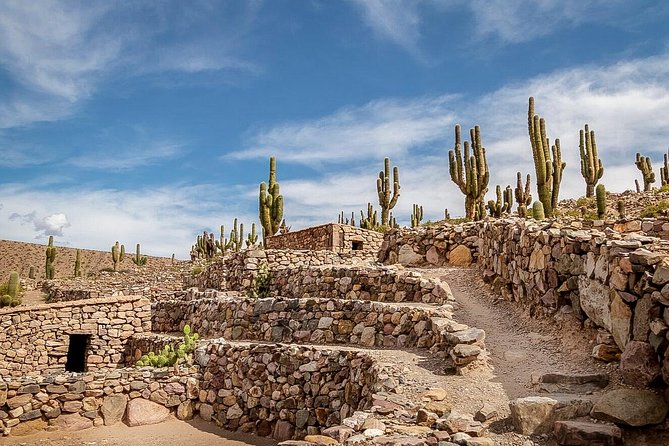
At Santa Rosa de Tastil, you visit the remains of a pre-Incan settlement dating to the 13th century. The stop adds cultural context to a day that could otherwise become an endless procession of views from a vehicle window. You then continue to San Antonio de los Cobres, associated with the local Pachamama, or Mother Earth, celebration.
The road eventually reaches Salinas Grandes, a broad white salt plain at about 13,000 feet. This is the moment when the long drive earns its keep. The bright salt surface, strong natural light, and reflections create the famous scale-bending photographs. Artificial water pools make the reflective effect possible in some areas, so watch your footing carefully.
The guided visit at the salt flats receives the strongest praise connected with this experience. It is more than a quick photo stop. The local guidance helps you understand where to walk and how to use the reflective pools safely. Give yourself time to enjoy the strange silence and enormous open space instead of turning the stop into a frantic camera session.
The day ends in Purmamarca, at the foot of the Seven Color Hill. You will be ready for dinner and sleep. The combination of altitude, sun, and road time can be tiring, so do not plan a late night.
Day 3: Seven colors and the Humahuaca Gorge
Day three is another full outing, lasting about ten hours. It explores the Humahuaca Gorge, a UNESCO World Heritage Site, with a series of stops that show how geology, Indigenous culture, and colonial history meet in northern Jujuy.
Purmamarca provides the first major color display, with the Seven Color Hill rising behind the town. Later, at Maimará, the Paleta del Pintor, or Painter Palette, adds another band of mineral colors to the route. These are not isolated attractions in a park. They form the backdrop to settlements, roads, churches, and daily life.
At Tilcara, you visit Pucará de Tilcara, a restored Indigenous fortress. The site is described as somewhat ramshackle, which is useful to know. This is not a polished museum complex, but that roughness is part of its character. The entrance fee is not included, so carry some money for park and site charges.
The Uquía Church contains colonial-era paintings known as Pinturas Cuzqueñas. This is a smaller cultural stop, but it gives the day variety. After hours of mountain scenery, a modest church with distinctive artwork can be a welcome change of pace.
The route also passes the Tropic of Capricorn marker before reaching Humahuaca itself. In town, you can walk among traditional houses and narrow streets while taking in the slower rhythm of the gorge. The setting has an old-world feel, but the day is still tightly scheduled. You return to Purmamarca that evening rather than staying farther north.
This is a rewarding day for anyone who wants more than scenery. You get geology, archaeology, art, village streets, and a clear sense of the region’s layered identity. The tradeoff is time. Ten hours in a vehicle, with several stops, leaves little opportunity for a long independent walk.
A completely different kind of day:
- Full-Day Tour Cafayate Calchaqui Valleys with Wine
★ 4.5 · 347 reviews - From Salta: Cafayate, land of wines and imposing ravines
★ 4.4 · 347 reviews - From Salta: Serranías del Hornocal & Hill of 14 Colors Tour
★ 4.4 · 339 reviews - From Salta: Cachi and Los Cardones National Park Tour
★ 4.5 · 285 reviews
Day 4: Crossing Paso de Jama into Chile
Day four is the logistical hinge of the entire trip. A private transfer takes you from your Purmamarca hotel to the bus stop, then you board a public air-conditioned bus to San Pedro de Atacama.
The ride takes roughly nine to ten hours and crosses the Andes through Paso de Jama, one of the world’s highest international passes. The scenery is the reward: high plains, distant peaks, broad open country, and the stark colors of the Altiplano.
Keep your passport within easy reach. You are leaving Argentina and entering Chile, so border procedures are part of the day. Do not bury your documents in your main luggage or assume you can reach your hotel before needing them.
The arrival routine is less polished than the earlier hotel transfers. Once you reach San Pedro, you go to your hotel by your own means. That may be simple, but it is worth confirming the hotel location and having the address ready before you arrive.
San Pedro sits at about 2,500 meters above sea level. Its white-painted adobe buildings, dirt streets, lanterns, small restaurants, and surrounding peaks give it a distinct character. After such a long bus ride, keep the evening quiet. The next two days include desert excursions, and your body may need time to adjust.
Day 5: San Pedro and the Moon Valley
The morning is free, which is valuable after the border crossing. You can walk through San Pedro, visit the handicraft market, and look at Atacameño ceramic work. This free time also gives you a chance to buy snacks, water, or anything needed for the remaining excursions.
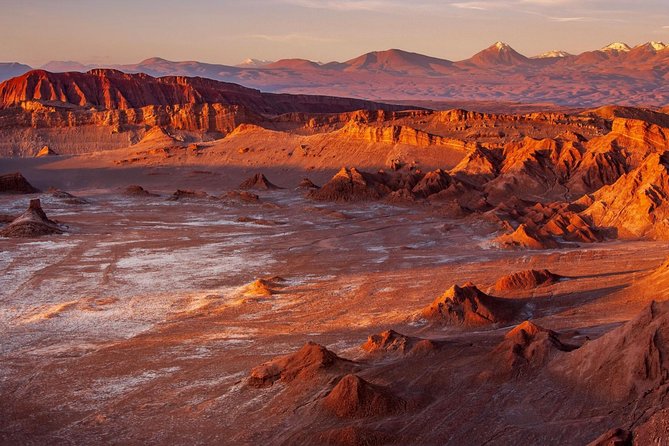
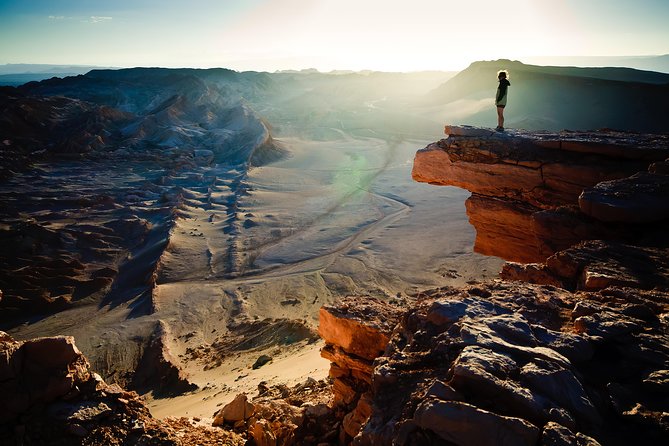
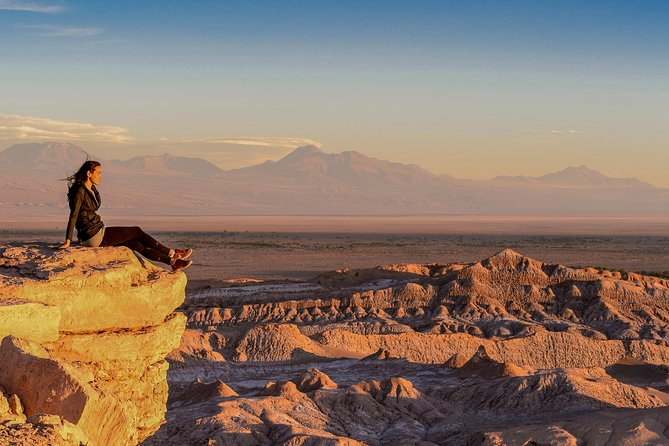
The afternoon outing goes to Moon Valley, a national reserve in the Atacama Desert. The name fits the setting: eroded formations, bare ground, mineral colors, and sharp light create a place that feels far removed from ordinary scenery.
The excursion lasts about four hours and uses a shared service. The practical catch is easy to miss: pickup and drop-off are not provided at your hotel. The tour begins and ends at the local operator’s downtown office in San Pedro. Confirm the office location and allow time to reach it.
Moon Valley is a good contrast to Salinas Grandes. The salt flats are bright, flat, and reflective. Moon Valley is broken, dry, and sculpted. Seeing both helps you understand how varied this high desert region can be.
The entrance fee is extra, listed at CLP 10,000. Bring appropriate clothing for strong sun and changing desert temperatures, but avoid assuming the afternoon will feel warm all the way through. Conditions can shift quickly in open desert country.
Day 6: Tatio Geysers before breakfast
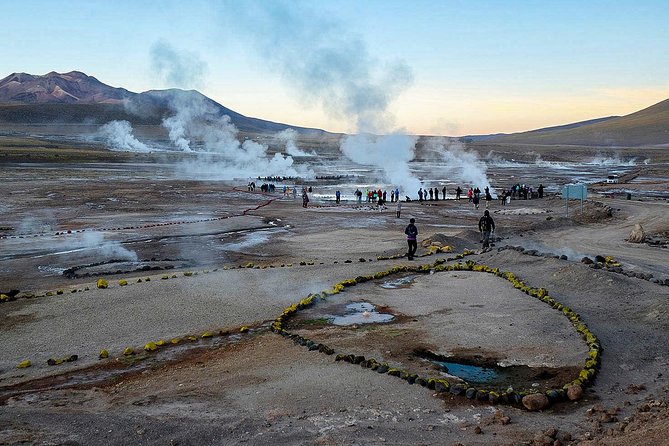
Tatio Geysers requires an early hotel pickup and an eight-hour shared excursion. The early start is not a minor detail. You visit at dawn, when temperatures can fall below zero and the rising steam is at its most dramatic.
The geothermal field shows the Earth’s heat pushing through the cold surface. Steam columns can rise as high as 10 meters, creating the main spectacle. Trails let you walk across the area and take photographs, but stay alert to the conditions and follow guide instructions around geothermal features.
Breakfast comes picnic-style after the geyser visit. The guidance specifically advises you not to eat before reaching the geysers. If you normally need food early in the morning, take that seriously when planning the night before, but follow the stated tour guidance.
The return trip adds Machuca village and the Putana River bofedal, or wetlands. These stops prevent the excursion from being only a geyser run. You see more of the high desert on the way back, then arrive in downtown San Pedro around noon.
The afternoon is free for lunch, rest, or another optional excursion. I would protect at least part of that time for recovery. A pre-dawn departure, freezing temperatures, high altitude, and several hours on the road can take more out of you than expected.
The Tatio entrance fee is not included and is listed at CLP 15,000. Add that to the Moon Valley fee and any Pucará admission when working out your total budget.
Day 7: Transfer to Calama Airport
The final transfer takes you from San Pedro de Atacama to El Loa Airport in Calama. The drive is listed at about two hours, and the service is shared.
The departure time depends on your flight, so provide accurate flight details and leave enough margin for the transfer. This is not the place to schedule a tight connection without checking the operator’s recommended timing.
By the end, you will have crossed from Salta to San Pedro through some of the highest and driest country in the region. The route is demanding, but it covers an unusual range of places in one organized trip.
How the price compares with the effort
The $1,475 price makes the most sense if you value coordination. Six nights of lodging, six breakfasts, bilingual guides, several guided excursions, airport transfers, hotel transfers, and the cross-border bus ride are bundled together.
The value is weaker if you prefer slow travel or already have accommodation and transport arranged. You are paying for convenience, but you are also accepting shared services, fixed departure times, and long road days.
Budget separately for entrance fees, lunches, dinners, drinks, international or domestic flights, and the transfer from the San Pedro bus arrival to your hotel. The Moon Valley afternoon outing also requires you to reach the downtown office independently.
The free cancellation policy allows a full refund if you cancel at least 24 hours before the experience begins. Changes or cancellations inside that window are not accepted for a refund.
Who should book this route?
I would choose this trip if you want northern Argentina and the Atacama covered in one week, without arranging each bus, hotel, guide, and transfer yourself. It suits active adults and older children within the stated age range of 12 to 70, provided they are comfortable with altitude and long drives.
It is a good fit for photographers, first-time visitors to the region, and anyone drawn to unusual natural features. Salinas Grandes, the colored mountains around Humahuaca, Moon Valley, and Tatio offer four very different visual experiences.
I would hesitate if you dislike public transport, early starts, border crossings, or changing hotels. The tour is also not recommended for people with severe cardiac diseases because of the high-altitude areas visited. Tell the operator about dietary restrictions, allergies, or other special requirements when booking.
FAQ
How many nights of accommodation are included?
Six nights are included: one night in Salta, two nights in Purmamarca, and three nights in San Pedro de Atacama.
Is transportation from Argentina to Chile included?
Yes. An air-conditioned public bus from Purmamarca to San Pedro de Atacama is included. The journey takes about nine to ten hours and crosses Paso de Jama.
Are entrance fees included?
No. Entrance fees for Pucará de Tilcara, Moon Valley, and Tatio Geysers are not included. The listed fees are CLP 10,000 for Moon Valley and CLP 15,000 for Tatio Geysers.
Does the Moon Valley tour pick me up at my hotel?
No. The afternoon Moon Valley excursion begins and ends at the local operator’s downtown office in San Pedro de Atacama. You must reach that office independently.
What ages can join the tour?
The experience is offered to people from 12 through 70 years old, and the maximum group size is 14 participants.
Is airport transportation included at the beginning and end?
Pickup from Salta’s General Belgrano Airport to your hotel is arranged on arrival, and a shared transfer from San Pedro de Atacama to Calama’s El Loa Airport is included on the final day.
Should you book the Best of Salta and Atacama?
Book it if your priority is seeing the region’s major natural sights with the hard connections handled for you. The guided Salinas Grandes visit, the Humahuaca Gorge, the Andes crossing, Moon Valley, and Tatio Geysers create a strong seven-day route.
Skip it if you want leisurely mornings, private transport throughout, or plenty of free time in each town. This is a high-altitude road journey with real travel days, not a relaxed resort holiday. Pack patience, warm layers, passport access, and a sensible budget for extra fees, and the route offers remarkable value for a tightly organized week.
Just added in Salta and Jujuy
- Bike Adventure through Juella with lunch★ 5.0 · 9 reviews
- Jujuy Wine Route (Quebrada de Humahuaca)★ 5.0 · 2 reviews
- Mountain biking in the surroundings of Tilcara★ 5.0 · 28 reviews
- From Jujuy: Full-Day Tour to Salinas Grandes and Purmamarca★ 4.5 · 11 reviews
- From Jujuy: Serranías del Hornocal and the hill of 14 colors★ 5.0 · 3 reviews
- Visit to the Communities in the Salinas Grandes★ 5.0 · 3 reviews
- From Jujuy: Full Day Tour to Humahuaca Purmamarca and Tilcara★ 4.0 · 7 reviews
- Bike Adventure in Salinas Grandes with Picnic★ 5.0 · 24 reviews
Salta and Jujuy Tours, compared.
Full-Day Trip to Salinas Grandes and Purmamarca
Read our review →
Full-Day Tour Cafayate Calchaqui Valleys with Wine
Read our review →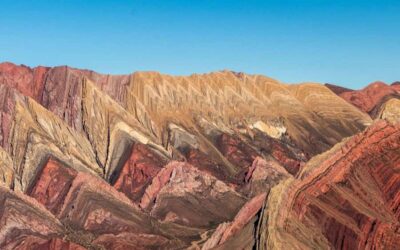
Serranías del Hornocal & Hill of 14 Colors Tour
Read our review →
Full-Day Tour Salinas Grandes and Purmamarca from Salta
Read our review →Browse the lists this tour appears in